
Best Foods to Eat Before and After a Workout: A Simple Nutrition Guide
Training hard on the wrong diet is like running a high-performance engine on the wrong fuel. You’ll still move, but you won’t go very far, and it will cost you in the long run. Nutrition isn’t an add-on to fitness — it’s part of fitness. Understanding the best foods to eat before and after a workout can directly affect your energy, your muscle function, and how quickly you recover. This guide breaks down exactly what to eat, when to eat it, and why timing matters just as much as the food itself.
Why Workout Nutrition Has a Bigger Impact Than Most People Assume
Many people separate diet from exercise. They track their training time carefully, but pay far less attention to what they eat. This is a serious oversight. Exercise creates real physiological demand: muscles break down during training and then need nutrients to rebuild stronger. Carbohydrates supply the energy needed to sustain effort, while protein provides the amino acids required for muscle repair. As a result, eating the wrong foods — or eating at the wrong time — directly hurts both performance and recovery. In fact, studies published in the Journal of the International Society of Sports Nutrition consistently show that timed nutrition outperforms a simple “total daily intake” approach for building muscle and improving endurance. Total calories still matter, of course. However, the timing and type of food you eat around exercise makes a measurable difference too.
What Are the Best Foods to Eat Before a Workout?
Pre-workout nutrition has one main goal: provide enough fuel to perform well, without causing stomach discomfort. Ideally, you should eat your pre-workout meal one to two hours before training. This meal should combine complex carbohydrates with a moderate amount of protein, while staying low in fat and fibre, since both can slow digestion. Complex carbohydrates — oats, brown rice, and whole-grain bread, for example — release energy gradually. This prevents the energy crashes that simple sugars often cause mid-session. Protein, meanwhile, helps kick-start the muscle repair process that begins during training itself. Fat is still important in your overall diet. That said, it slows gastric emptying, so it’s best eaten outside your immediate training window.
Pre-Workout Foods That Work Well
- Oats with banana and nut butter — steady energy with a natural sugar boost
- Whole-grain toast with eggs — complex carbs paired with high-quality protein
- Greek yoghurt with berries — easily digestible, high in protein, rich in antioxidants
- Banana with peanut butter — fast energy with enough protein for shorter sessions
What to Avoid Before Training
High-fat meals sit in the stomach too long, which causes discomfort during exercise. Large amounts of processed sugar spike blood glucose rapidly. Then, just as quickly, they cause a sharp crash — the opposite of sustained performance. Even small amounts of alcohol impair coordination, hydration, and your body’s ability to metabolise fuel efficiently.
What Are the Best Foods to Eat After a Workout?
Post-workout nutrition is arguably even more important than what comes before, since this is when muscle recovery and adaptation actually happen. After training, your muscles become primed to absorb nutrients, especially glucose and amino acids. This period is loosely known as the anabolic window — generally the 30 to 60 minutes after exercise, when nutrient uptake is at its best. During this window, your post-workout meal should prioritise carbohydrates to replenish glycogen stores, alongside protein to begin muscle repair. Unlike before your workout, a moderate amount of healthy fat is perfectly fine here, since digestion speed is no longer a performance concern.
Post-Workout Meals That Support Recovery
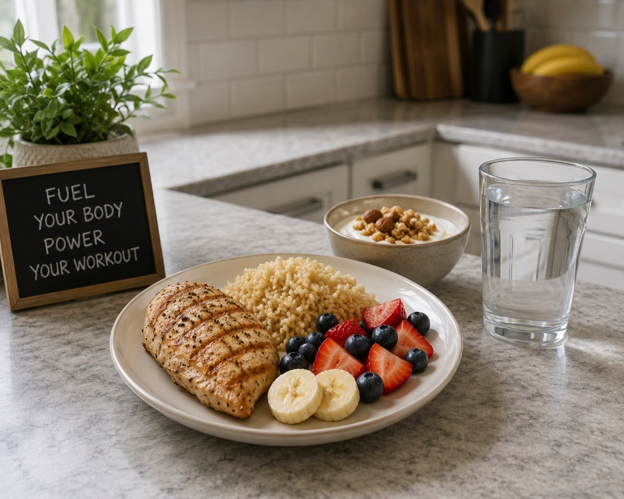
- Grilled chicken with brown rice and vegetables — the classic recovery combination, and with good reason
- Protein shake with a banana — fast-absorbing when a full meal isn’t convenient
- Cottage cheese with fruit — high in casein protein, ideal for evening recovery
- Eggs on wholegrain toast with avocado — nutrient-dense and easy to prepare
Hydration: The Factor Most People Underestimate
Even mild dehydration — just 1 to 2% of body weight lost in fluid — can reduce aerobic performance by up to 20%, and it noticeably affects strength output too. Despite this, hydration is often the last thing people think about in fitness nutrition. A simple approach works well: drink roughly 400–600ml of water two hours before exercise, sip consistently throughout your session, and rehydrate fully afterward. For sessions longer than 60 minutes, or for training in heat, electrolyte replacement becomes genuinely useful, not just a marketing suggestion. According to the Mayo Clinic’s guidance on exercise hydration, electrolyte drinks can help replace what’s lost through sweat during longer or more intense sessions.
Supplements: Useful in Specific Situations, Not a Foundation
Supplements certainly have their place. However, most beginners and general fitness enthusiasts don’t actually need them. Protein powder, for instance, is simply a convenient food — not a performance-enhancing product in itself. Creatine does have solid research support for strength and power gains in the right training context. Even so, it works best on top of an already solid baseline diet, not as a substitute for one.
Conclusion: Putting the Best Foods to Eat Before and After a Workout Into Practice
Ultimately, what you eat around your workouts determines how much you get out of them. Prioritising complex carbohydrates and moderate protein before training — and protein with carbohydrates afterward — gives your body exactly what it needs to perform and recover. Staying consistently hydrated completes the picture.
If you’re still building your exercise habits, our beginner’s guide on how to start working out explains how to structure your routine from scratch. And if you want to understand the full impact that consistent training has on your body and mind, read our post on the 10 proven health benefits of exercise.
Looking for a personalised nutrition and training plan? Visit our services page or contact us directly to get started.